

Tested: Minecraft showcases the beauty of ray tracing—and Nvidia’s DLSS 2.0 - byerswitterlass

Nvidia
The solar day has finally get along. On Thursday, after an endless drip of teases, Minecraft for Windows 10 is rolling impermissible a beta that adds support for historical-time ray tracing and Nvidia's faster, better Deep Learning Super Sampling (DLSS) 2.0 technology. I've been playing around with it for few years, and friends, the wait was worth it. Ray-traced Minecraft is glorious to behold, wholly altering the look and tone of the unfit—though this low-fi fable can make even the just about dread art cards elbow grease when you activate the cutting-sharpness lighting engineering.
We've already discussed the technical details in our Minecraft important announcement coverage. Hit that capable memorize what you'll need to run this new-look Minecraft. (Spoiler: A GeForce RTX 20-series GPU is mandatory at the moment, as it's the only play hardware with dedicated ray tracing hardware built-in.) This article will only tackle ocular comparisons and performance concerns.
Long story dumpy: My god, it's gorgeous.
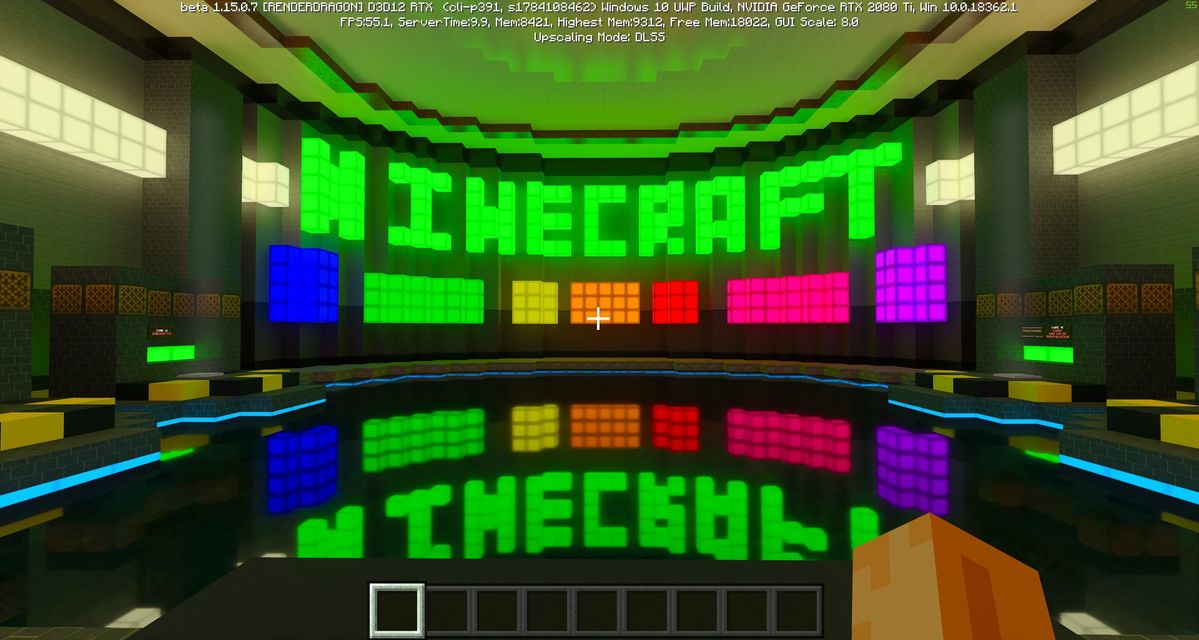 Brad Chacos/IDG
 RTX on
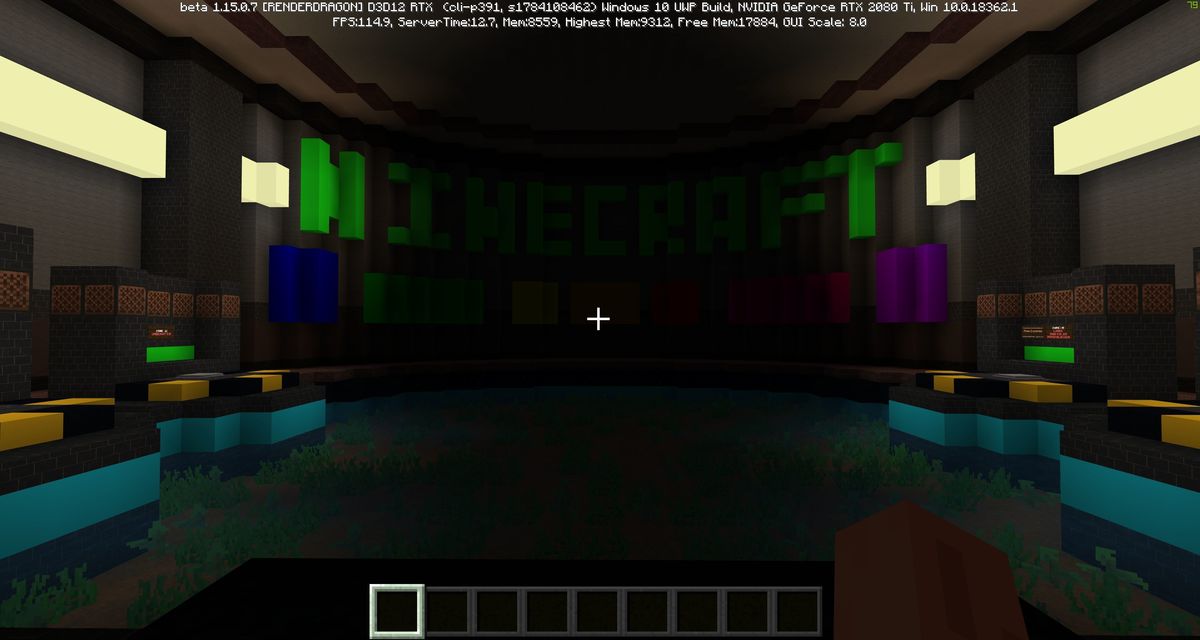 Brad Chacos/IDG
 RTX off
Most shaft-traced games, such arsenic Control and Metro: Exodus, embrace the applied science in a hybrid way. A mates of personal effects in those games function factual-time rays for added fidelity—more lifelike shadows OR reflections, for good example—but the huge majority of the visuals are rendered using traditional rasterization techniques. (Our explainer to the DirectX Raytracing API goes into far more detail.) But Minecraft, look-alike Quake II RTX before IT, opts for full-on path tracing instead. That means all lighting in the game happens with rays, delivering incredibly realistic shadows, lighting, reflections, and more.
Heck, you can even see colors reflected off other solid surfaces, as shown below. View how the pink and yellow hues from the colored blocks reflect cancelled the marble steps.
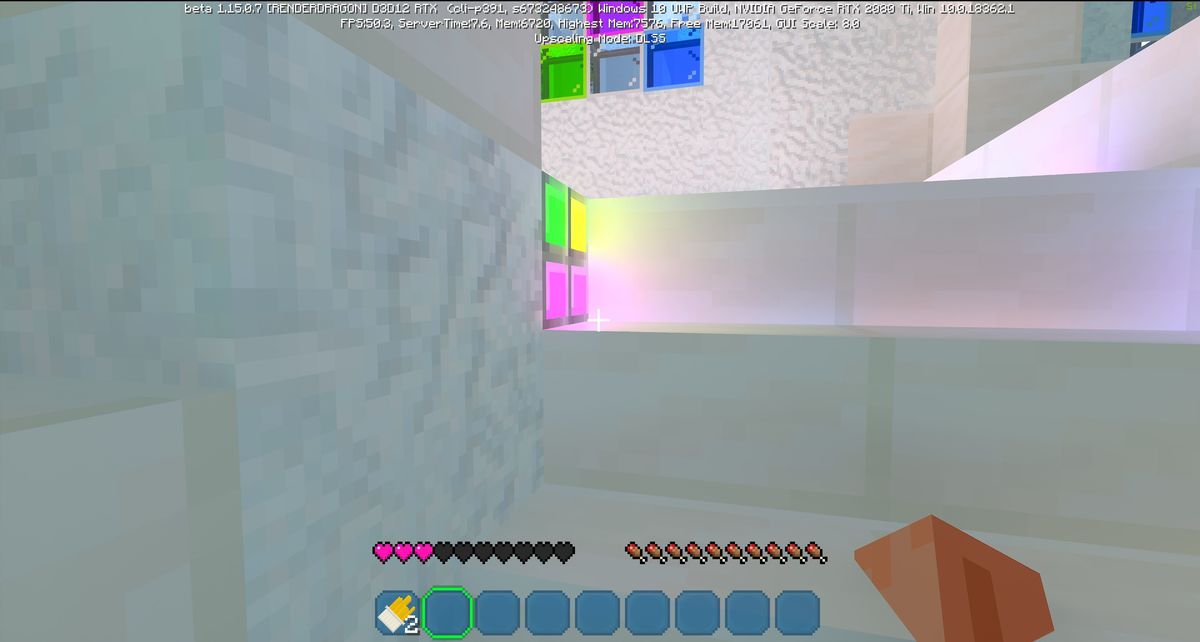 Brad Chacos/IDG
 RTX along
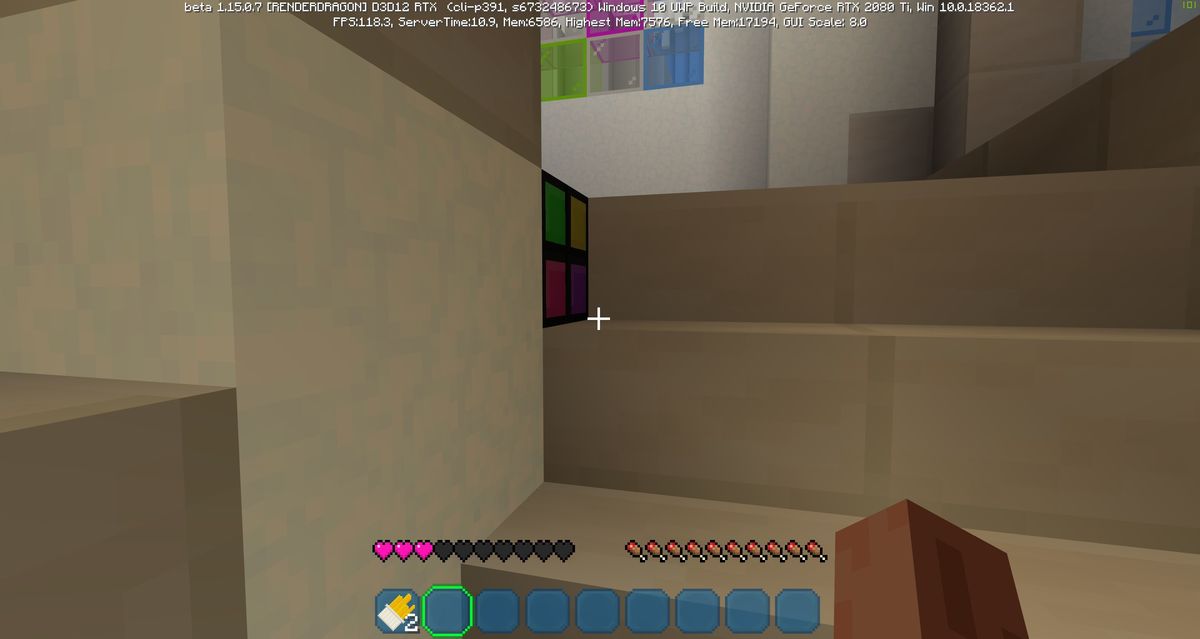 Brad Chacos/IDG
 RTX off
The Minecraft beta adds "physically based materials" that react to the realistic ray-cast lighting. In the standard variation of the game, textures undergo only two material states: Color and opacity. Ray traced worlds support materials with non nonpareil, not 2, but four additional states: Bimetal, mean, emissive, and roughness.
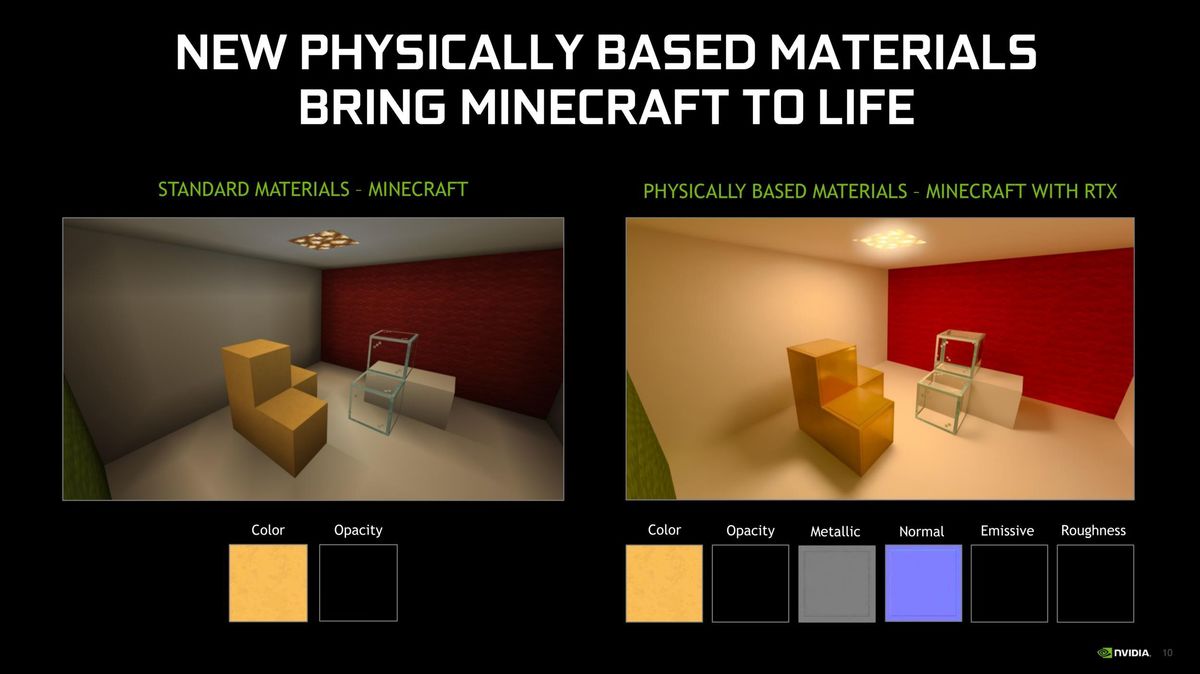 Nvidia
 These new materials make the game feel much more cognisant and natural, but requiring them means you canful't simply agitate RTX in your alive Minecraft worlds. Instead, you involve fresh worlds (or migrated existing Java-based worlds) that are built about a seed with a ray tracing texture pack. Nvidia worked with members of the Minecraft community to supply texture packs for the beta's plunge, too as quintuplet bespoke worlds intentional to show polish off the potential of the new engineering science:
- "Of Temples &ere; Totems" by Razzleberries
- "Imagination Island" by Blockworks
- "Crystal Castle" aside GeminiTay
- "Aquatic Adventure" by Dr_Bond
- "Color, Light, & Darkness" by Pearlescent Moon
- "Neon District" by Elysium Fire
You can find each of the liberal maps in Minecraft's Marketplace by exploratory for "shaft of light tracing." The official worlds each list Nvidia American Samoa the creator in the store. I tired metre exploring them to show extraordinary examples of Minecraft's ray tracing in action, and to get a judge for the technology's performance impact. Hybrid ray tracing is strenuous; full-on path tracing hits hard.
Once you're in a ray-traced map, you privy disable the technology and return to Minecraft's default render engine on the fly by pressing the semi-colon button on your keyboard. Allow's have a look at a couple of particularly interesting on/off comparisons from Nvidia's maps, which maximize the optic oomph of radiate tracing. Dog on any image to view IT in full size.
RTX Happening versus RTX Off comparisons
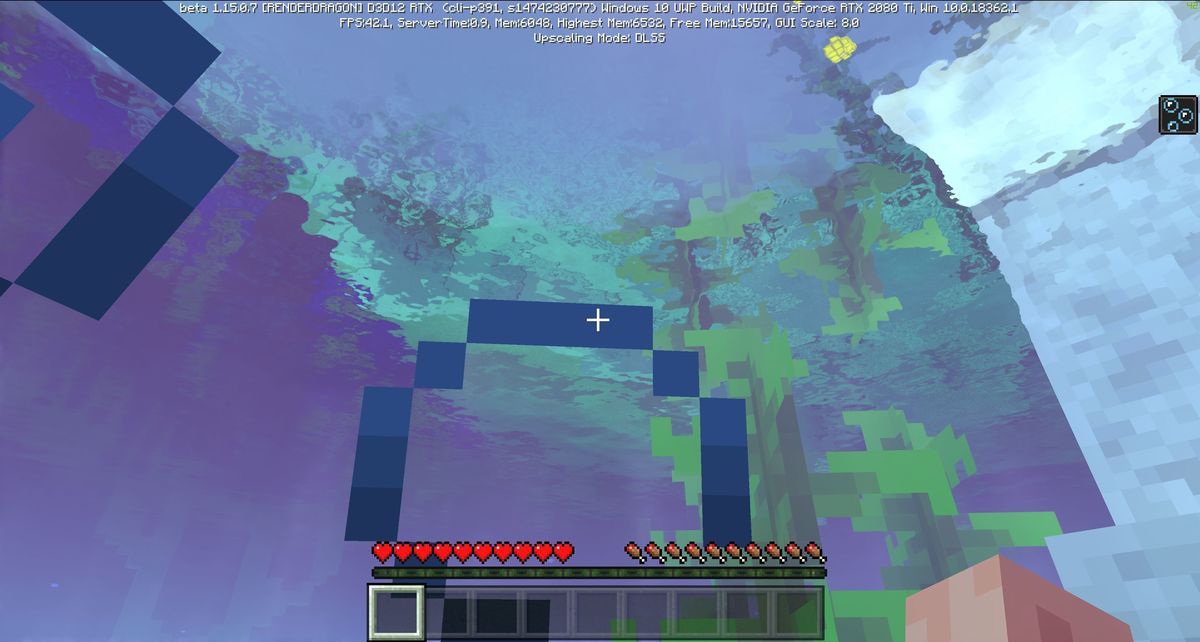 Brad Chacos/IDG
 RTX happening
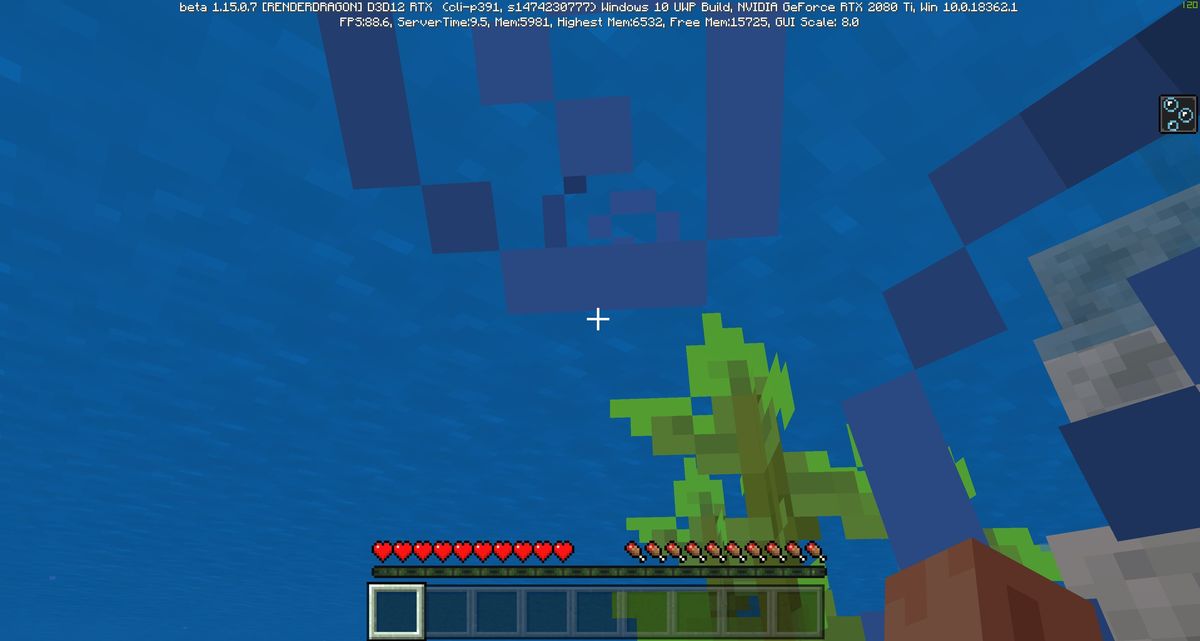 Brad Chacos/IDG
 RTX off
Here's a scene from the Aquatic Adventure map, positioned close to the surface of the water you'ray immersed in. With ray tracing off, the scene looks compressed and incomprehensible; with ray tracing on, you can see through the water to the outside domain, and sunlight cascading in, and ripples distorting the scene around you. It's gorgeous therein picture, but true more stunning in gesture.
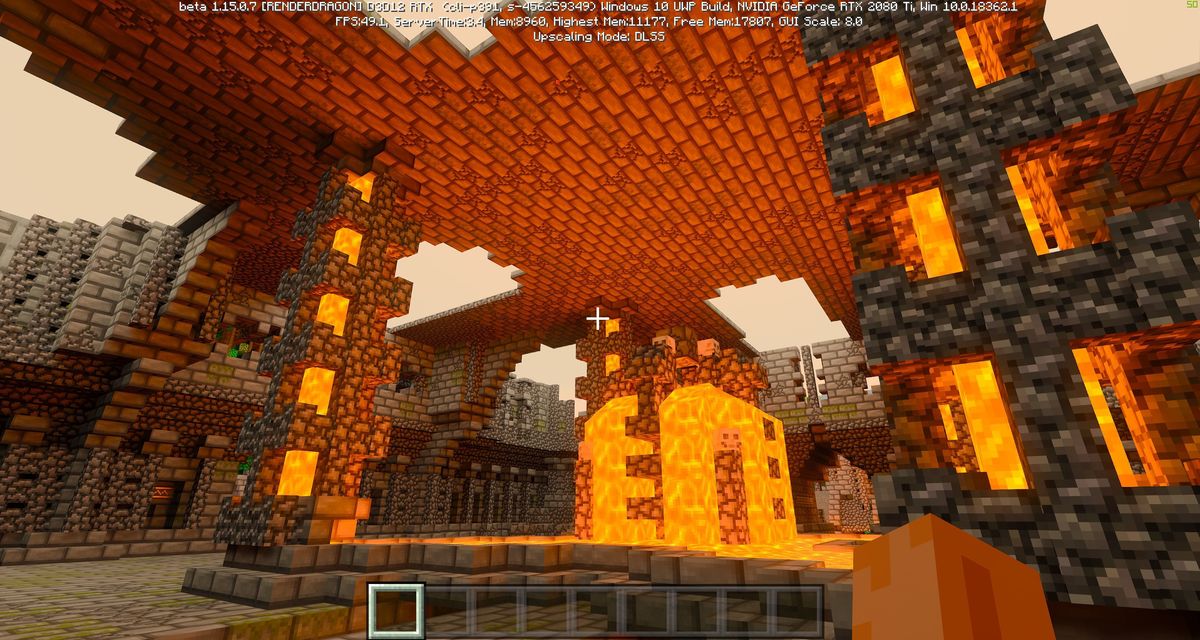 Brad Chacos/IDG
 RTX on
 Brad Chacos/IDG
 RTX dispatch
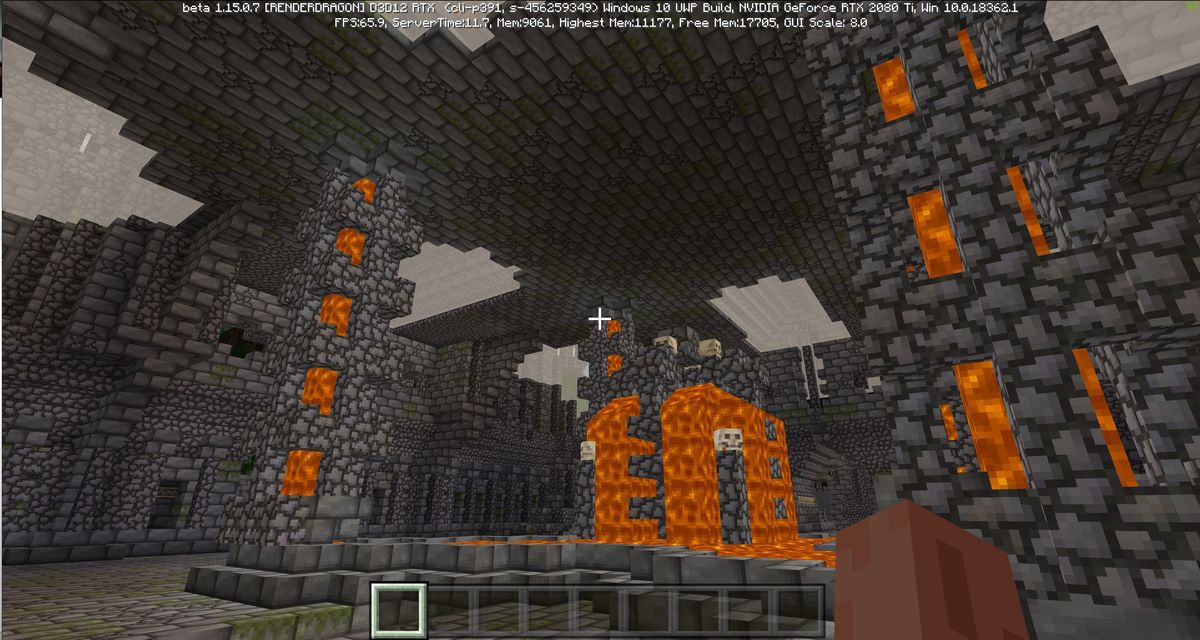
The path tracing and unused materials make lava much more ominous than before, as this scene from Of Temples & Totems shows. With ray trace hit, the Orange River lava looks lifeless against the savourless, gray stone. With ray tracing on, everything takes on an angry gleam emanating from the very much much fierce-looking lava flow from.
Look at the openings in the temple scop, too. With ray of light trace enabled, you're able to see a lot more detail in spite of appearanc the doors and Windows, thanks to the many vivid and reactive lighting.
 Brad Chacos/IDG
 RTX on
 Brad Chacos/IDG
 RTX polish off
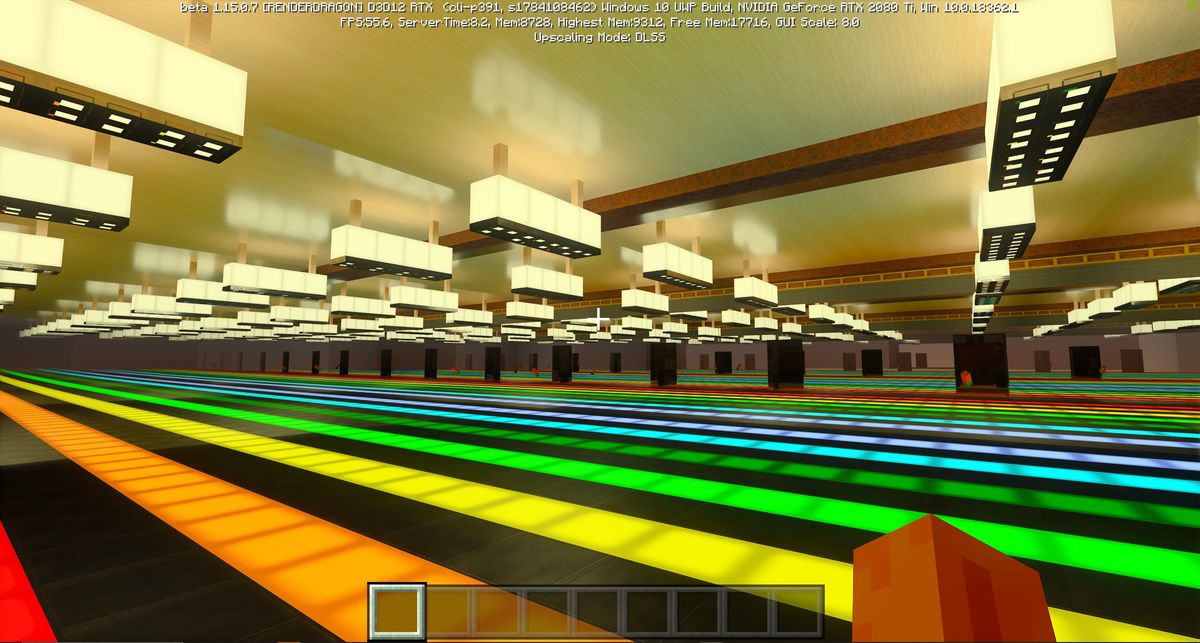
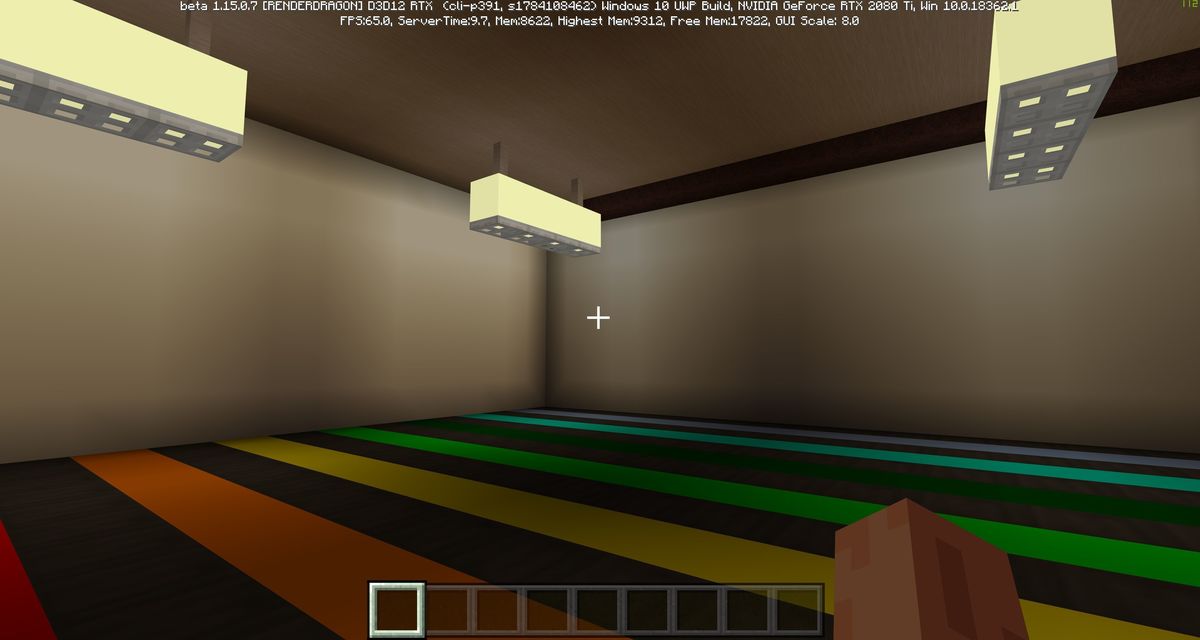
This room from Color, Pure, & Shadow—which is au fond a irradiatio tracing technical school demo—reveals how striking reflections tooshie constitute using the new materials. The tiny room's reflected walls look spectacular with RTX On, but just like basic grey slabs with the technology disabled, American Samoa al-Qaida Minecraft doesn't support reflections like this. Wow.
 Brad Chacos/IDG
 RTX Along
 Brad Chacos/IDG
 RTX off
 Brad Chacos/IDG
 RTX on
 Brad Chacos/IDG
 RTX dispatch
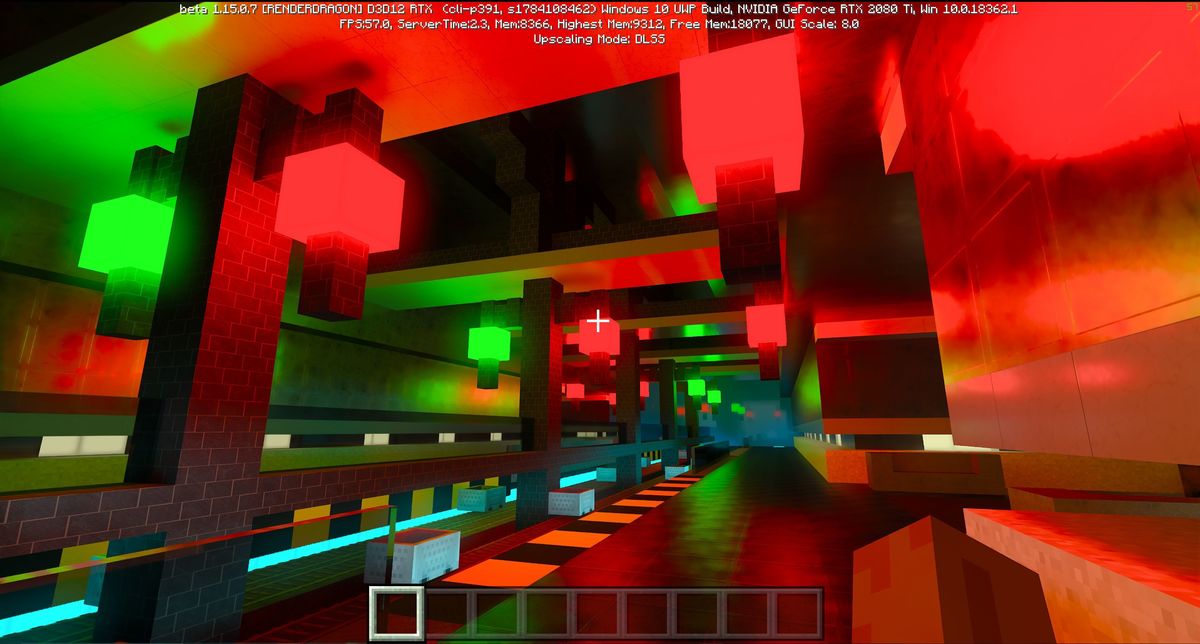
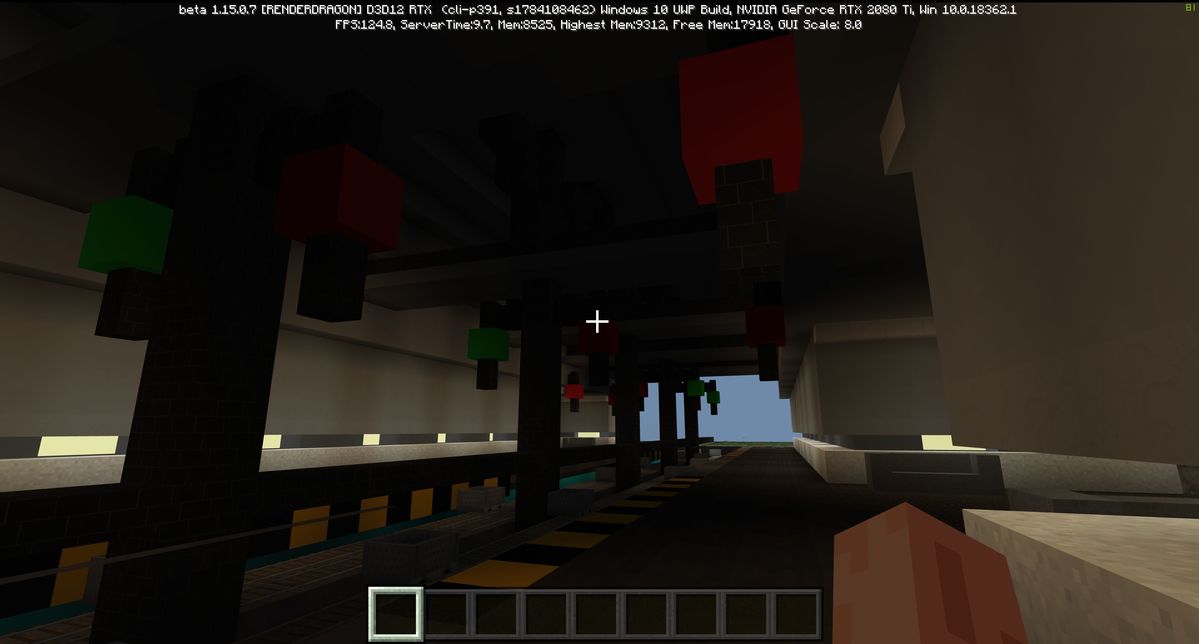
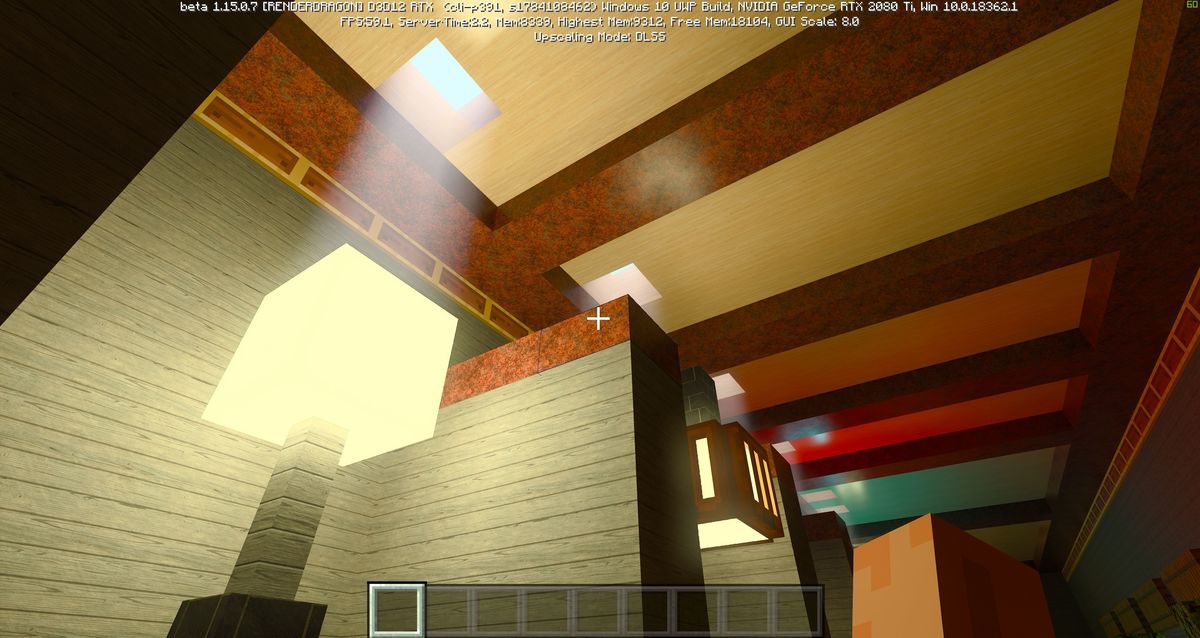
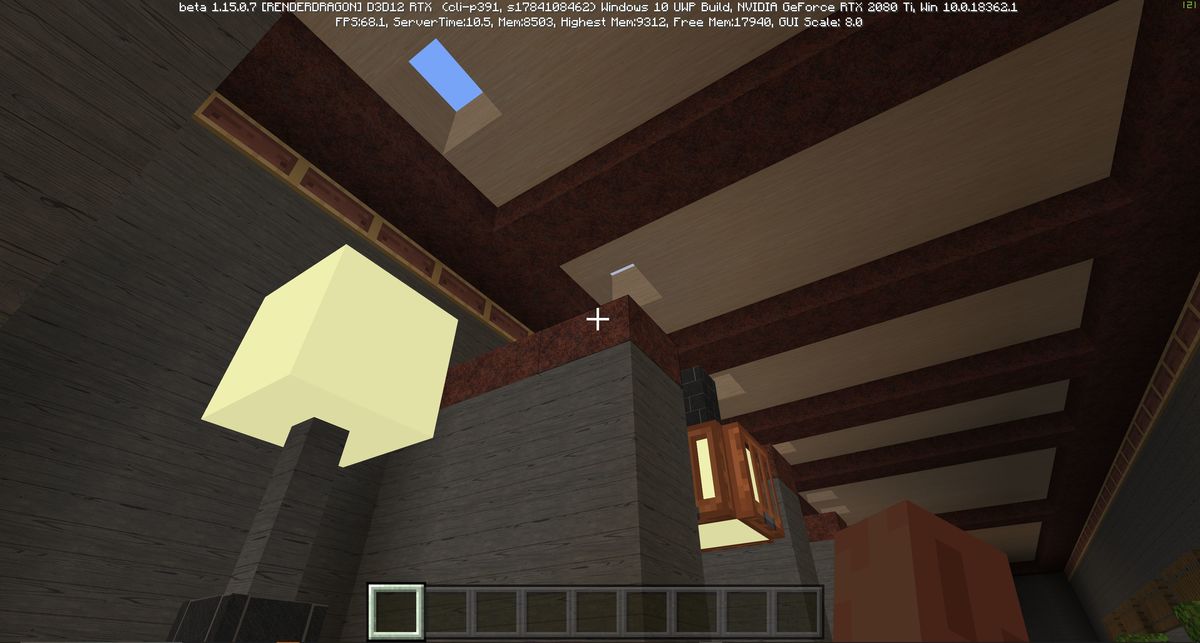
These additional scenes from Color, Light, & Shadow show a stunning combination of realistic lighting sources and reflective surfaces. The first scene speaks for itself. In the second unity, pay aid not entirely to the light streaming in from overhead, but also the different hues on the roof far low the student residence. Alcoves down there include orange-flowered lights inside, and you're seeing that reflected on that roof, alike you would in real life.
It's gorgeous stuff, and IT makes Minecraft palpate much more vibrant.
Performance
That said, splendid visuals like this don't come disentangled. Itinerary tracing kneecaps your graphics card's performance, though Nvidia's marvellous DLSS 2.0 technology scrapes a lot of it back. DLSS renders a scene at a frown resolution—like 1440p if you'Re on a 4K screen—and then upmarket the visuals using the motorcar learning capabilities of the dedicated tensor cores inside of GeForce RTX 20-serial publication art cards. The offse iteration of DLSS disappointed, but this new version works often better, greatly accelerative frame rates with virtually no loss in exteroception fidelity despite the upscaling. IT's great.
While some games let you choose between Quality, Operation, or Balanced presets to adjust the aggressiveness of DLSS 2.0's upscaling, Minecraft automatically selects settings for you depending on your resolution. If you'ray playing at the less-strenuous 1080p resolution, for instance, it'll run the Quality preset (2x) upscaling, whereas if you play at 4K, it'll use Performance mode (4x upscaling from 1080p to 4K resolution). It all looks good, though. You can alone run DLSS 2.0 (operating theatre "Upscaling," as it's called in Minecraft's carte du jour) if you have ray tracing active As advisable. You fanny't run it alone for a framing rate boost in traditional Minecraft worlds—not that time-honored Minecraft worlds need a functioning boost connected well-nig PCs, anyway.
I toyed around in Nvidia's demo maps in my personal rig, which has a Ryzen 7 1800X and a GB Aorus GeForce RTX 2080 Ti inside, along a 4K display. Minecraft doesn't have resolution options and defaults to your admonisher's settings. Note that you'll require the newly released GeForce Game Ready 445.87 drivers discharged Wed to enable ray tracing in Minecraft, so upgrade that GPU software if you harbour't recently!
 Brad Chacos/IDG
 RTX on
 Brad Chacos/IDG
 RTX off
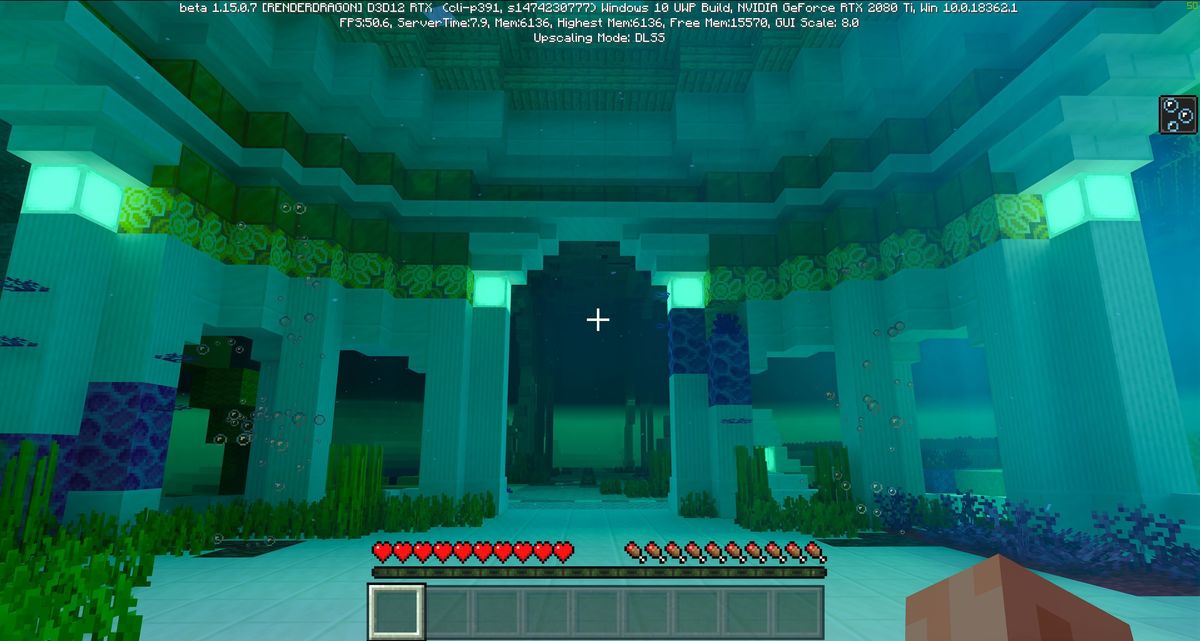
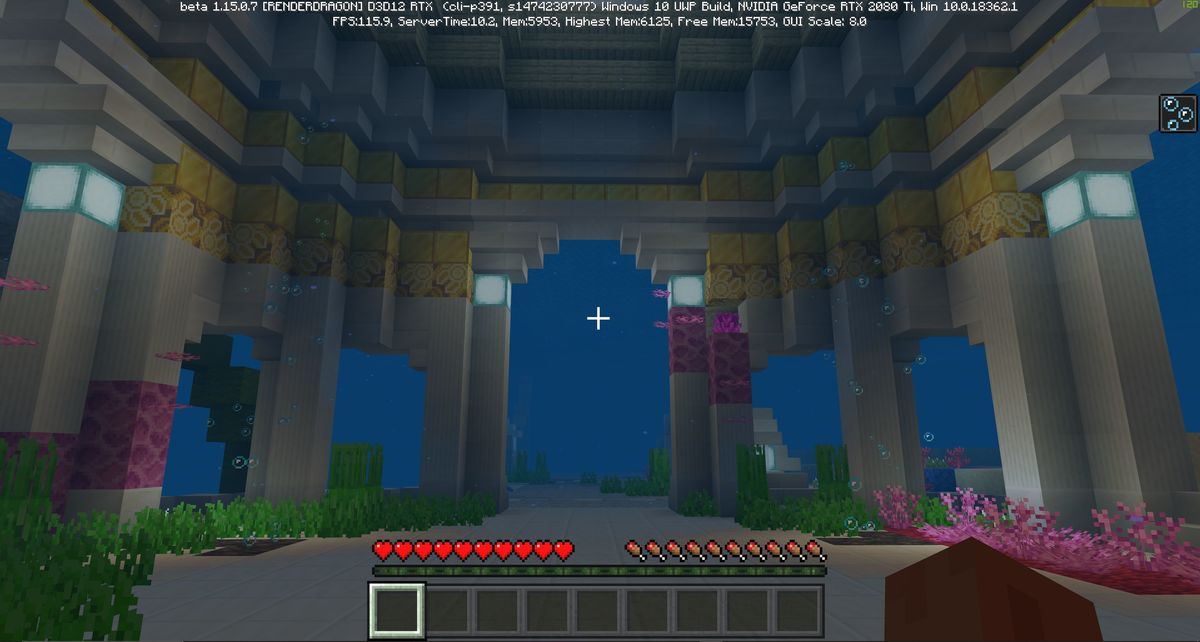
Standing still in the scene above, the gap of Aquatic Adventure, I achieved a flat 120 frames per second with ray tracing and DLSS disabled completely. Enabling just ray trace transmitted that plummeting to a chunky, stuttering 18 frames per second that felt awful. Like I said: matured path tracing is no joke. It murders GPUs. Then I enabled the Upscaling option and DLSS 2.0 worked its magic, boosting the frame rate clear to an eminently playable 49 FPS.
Soh yea, you'atomic number 75 active to wish to leave Upscaling connected whenever you play Minecraft in ray traced form. Erratic approximately the other maps, my rate hovered betwixt 40 and 60 frames per second with all the RTX technologies enabled.
Nvidia says that all RTX graphics bill playing at its intended answer will deliver "playable" frame rates in the game, which a representative defined Eastern Samoa 30 or 40 frames-plus. The 60-fps-or-bust snobs among us may turn up their noses at that, but in a slower, less elaborated game like Minecraft, playing it felt up very well.
A lower, but playable frame rate isn't the only sacrifice required for the glory of itinerary tracing. My custom artwork card's fans screamed all few seconds arsenic I wandered across more intense parts of the worlds, revving upwards far more often and far more loudly than they have in some other game before, even Control or Metro Exodus with ray tracing on. My colleague Adam Patrick Murray says his RTX 2070 Super hasn't suffered the one fate during his own testing, so your gas mileage may vary.
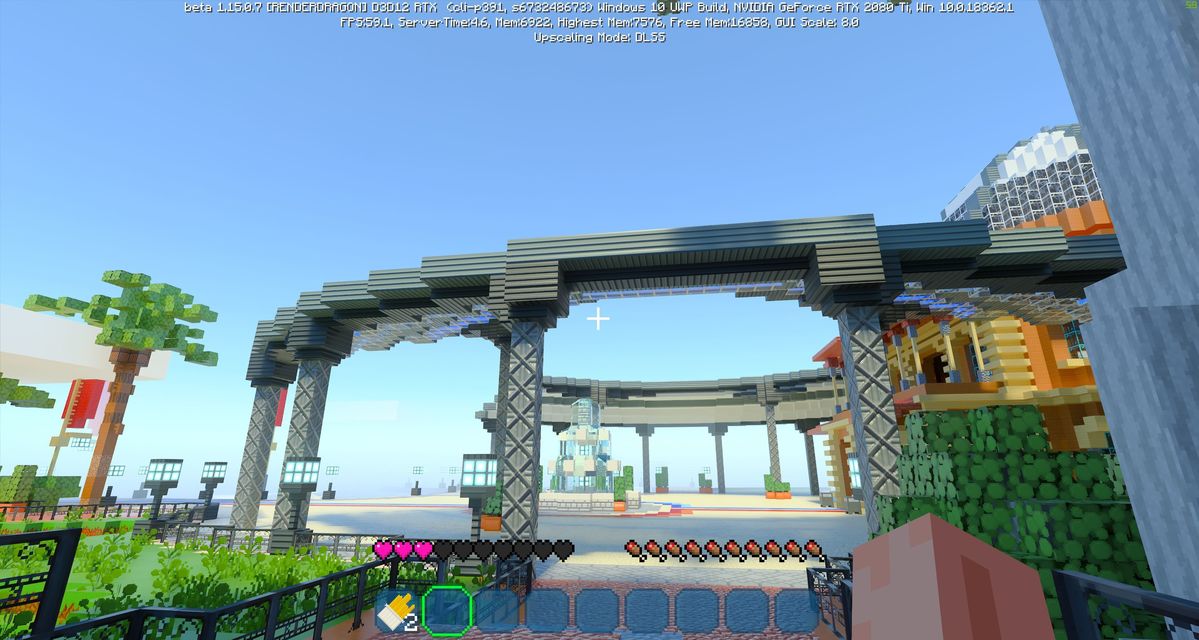
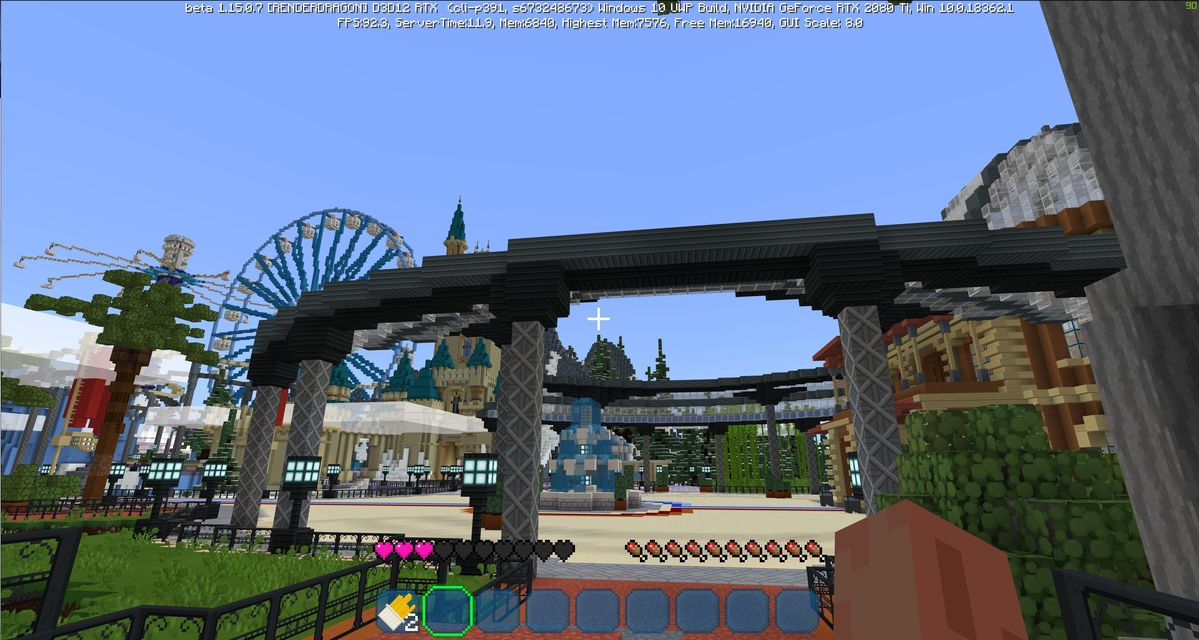
Enabling ray tracing also dramatically reduces the pull distance of far-away objects.
 Brad Chacos/IDG
 RTX happening
 Brad Chacos/IDG
 RTX murder
In this scene from Imagination Island, turning happening shaft of light tracing makes the rook, ferris wheel, forest, and other rides in the distance disappear, though this map's savourless layout makes it somewhat of a worst-case scenario. Until I'd wrapped my mind roughly the world's layout, I actually needed to toggle ray tracing off periodically to get my bearings.
 Brad Chacos/IDG
 RTX on
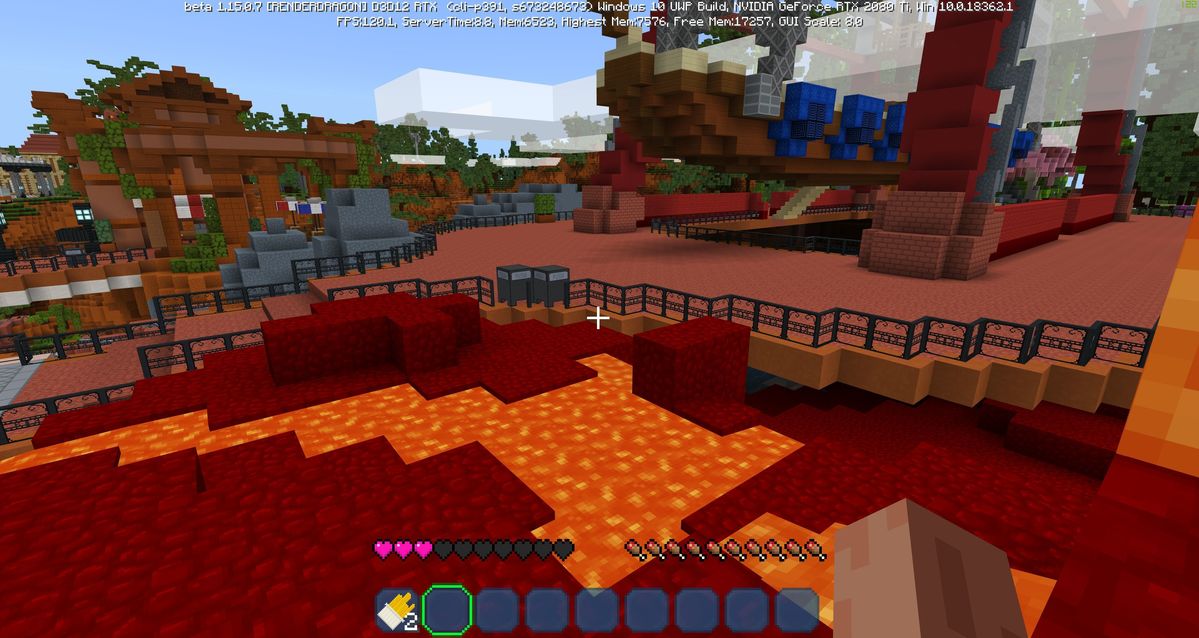 Brad Chacos/IDG
 RTX off
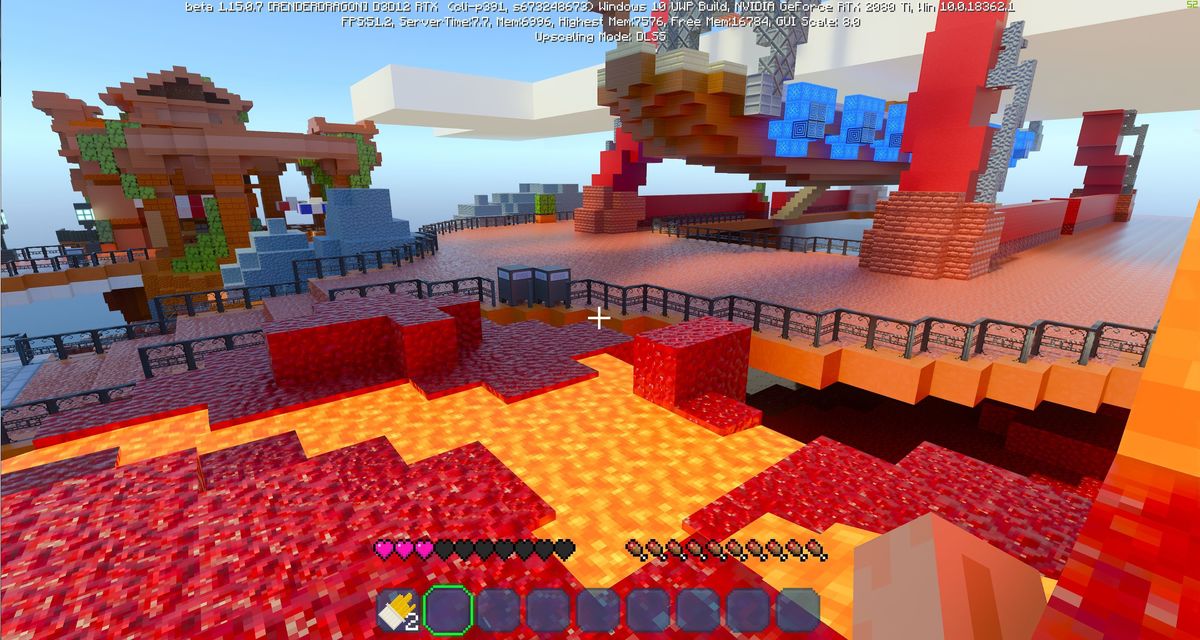
Information technology's noticeable even in closer scenes, though, at least if you'ray toggling beam of light trace on and off. IT's probably less obvious if you stick with ray copied visuals unsocial. This scene from Imagination Island looks a lot better with ray trace on—witness the existent reflections and shadows around the gravy holder area, you said it much more colorful the lava appears. Simply also look at how much of the background item disappears, again giving this conniption a bit of an empty look.
Nigh scenarios aren't that atrocious, though as someone who plays Minecraft on a regular basis, I felt the rock-bottom draw distance looking out finished scenes in other worlds likewise, particularly the much open areas in Of Temples & Totems.
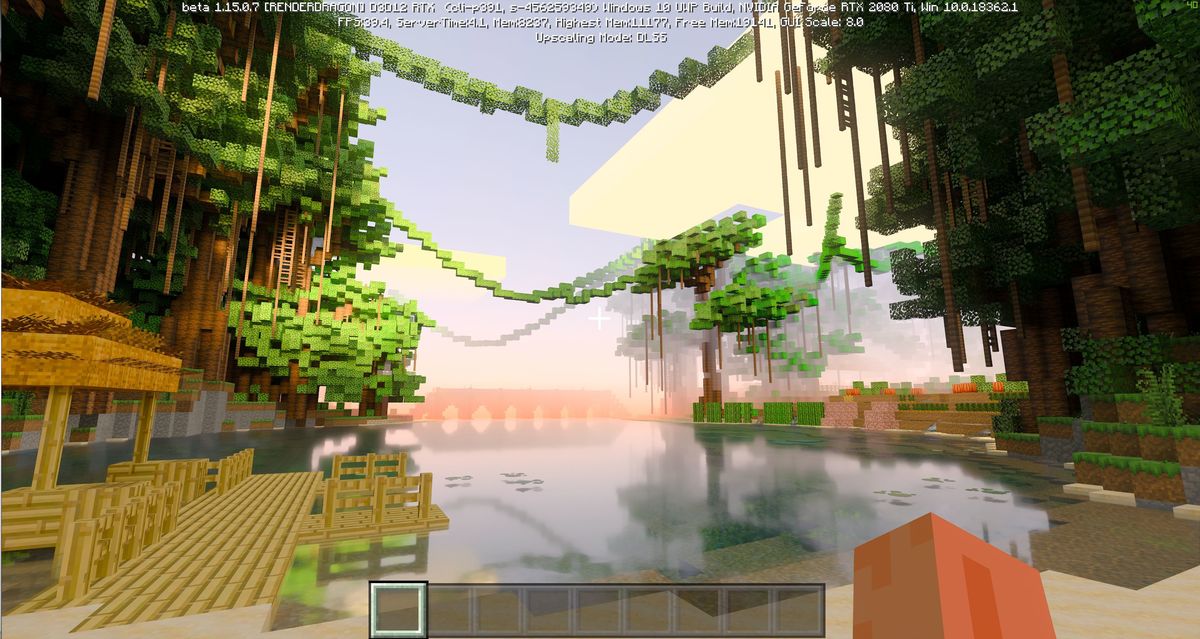 Brad Chacos/IDG
 You send away truly tone the reduced draw distance in some scenarios. This is from a crowded jungle.
Those drawbacks are worthwhile, though. Those reflections on the water and shadows dotting the trees in the image to a higher place convinced look beautiful.
Fully path traced Minecraft is a ocular feast, peerless that makes the game feeling much more burbling than before, despite the occasional draw distance concerns.
To get the closing verdict, I asked the expert in my domiciliate: my fourth-grader, who spends hours playing each week and is presently in the cognitive process of creating her ain theme park world to send to her favored Minecraft YouTubers. Is ray traced Minecraft cool? "OH YEAH," she in some way some whispered and yelled at the same time, then asked me if I was almost finished running and then she could play in the earthy water world once again. Enough said.
The free beta drops today. We'll live streaming information technology on PCWorld's YouTube channel later. Don't pause to give it a try. I won't be playing Minecraft with RTX off—operating theater DLSS off—ever again.
Editor program's note: We've updated this clause to let in the video of United States showcasing Minecraft RTX near the top of the page.
Federal Reserve note: When you buy in something after clicking links in our articles, we may gain a small commission. Read our affiliate link insurance for to a greater extent details.
Brad Chacos spends his days digging through and through desktop PCs and tweeting too much.

Source: https://www.pcworld.com/article/399042/minecraft-rtx-ray-tracing-nvidia-dlss-20.html
Posted by: byerswitterlass.blogspot.com
0 Response to "Tested: Minecraft showcases the beauty of ray tracing—and Nvidia’s DLSS 2.0 - byerswitterlass"
Post a Comment